Tesco AR wayfinding
Role
UX Designer
Team
Timeline
Skills
Brief
Reimagining the path-to-purchase experience to improve the in-store shopping experience
The grocery retail industry has experienced a huge shift in innovation over the last 10 years, from online shopping to self-checkouts to check-out free stores.
The recent pandemic has transformed the way industries operate as a result in supply-chains, strategic shifts and most significantly, human attitudes and behaviours.
The value of in-store retail
Higher spend in-store
40.0% of consumers spend more money than planned, in physical stores compared to 25.0% in online purchases (Aragoncillo and Orús, 2018)
Discovery
Understanding the existing experience
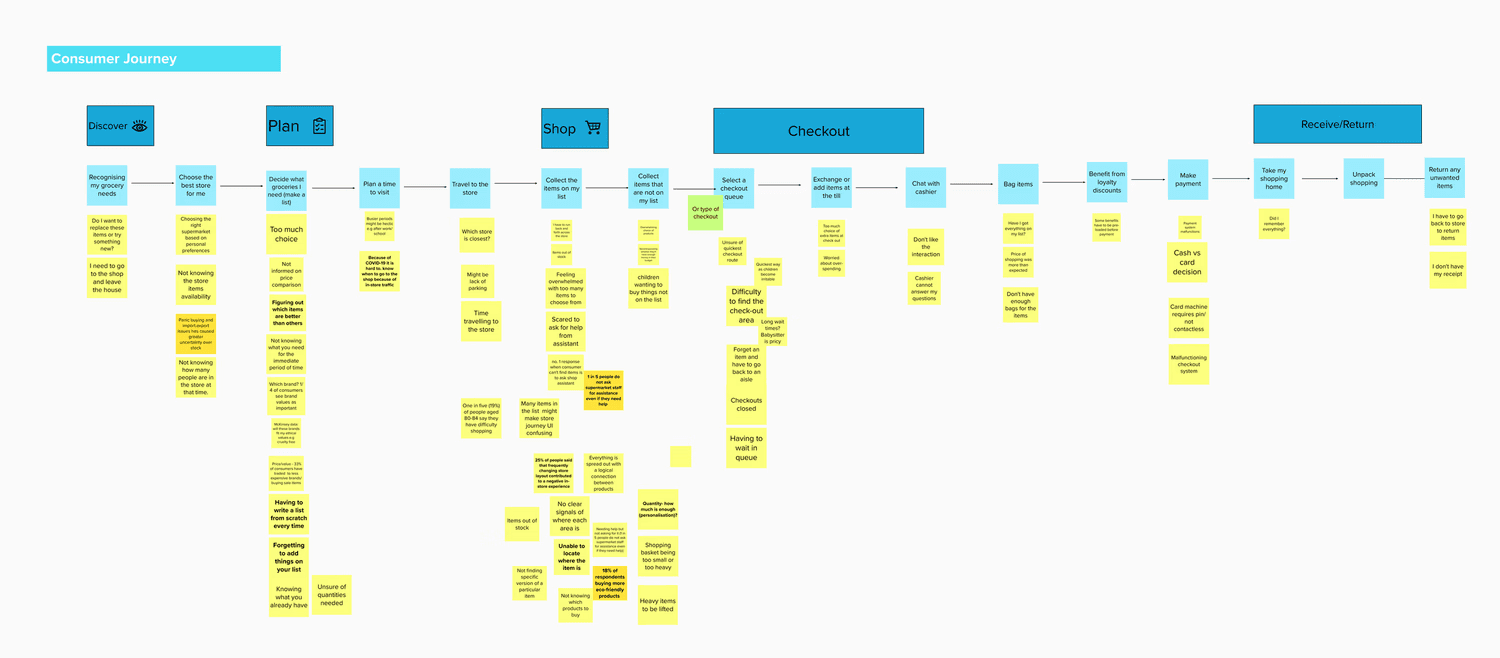
Along with another UX Designer, we sought to understand the existing experience when shopping in store, customer pain-points and the competitor landscape.
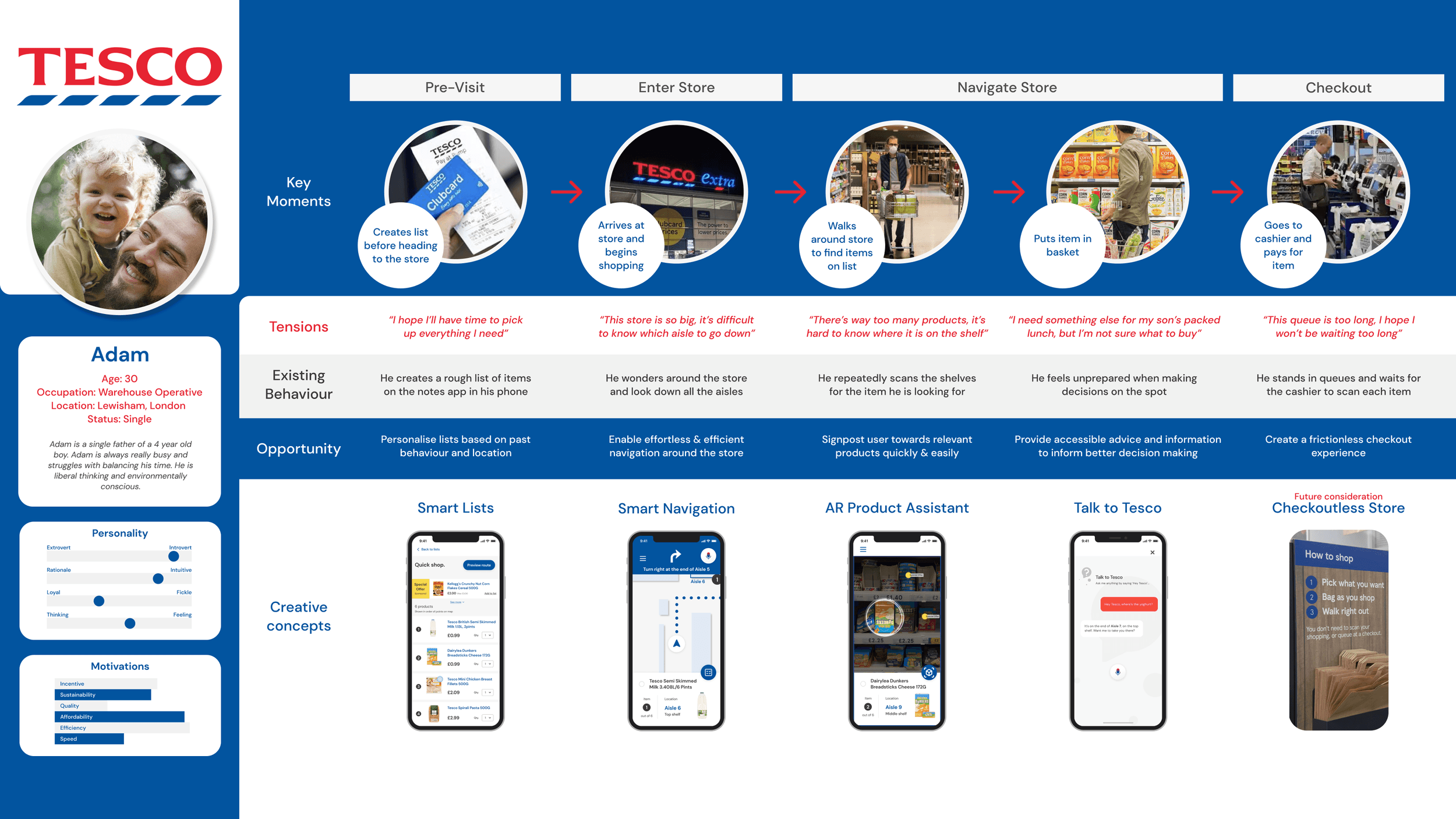
Based on assumptions, we generated a user persona and carried out auto-ethnographic research to better understand specific user needs. We then conducted semi-structured interviews with a couple of colleagues who match the archetype of our target user to capture deeper insights.
Key insights
Lists only help to remind
The utility of a standard list serves the purpose of jogging one’s memory. Customers want to find everything they need first time by taking the most time-efficient route around the store, so that they can complete their shop with minimal friction.
Emotions can easily override rationale
Customers love offers and club card prices. Factors such as hunger, time since payday and stress can cause a shopper to make an impulse decision.
Gaps in information reduces efficiency
Since the pandemic, people are more cautious and alert when in busy environments such as supermarkets. Especially during busy times in the day, customers feel reluctant to seek assistance in-store as a result of social anxiety and difficulty in finding staff on the shop floor.
How might we….
HMW improve path to purchase efficiency when shopping in store by utilising customer’s list data?
HMW personalise the exposure to offers and deals to customers using past-purchase patterns?
HMW support customers when shopping in-store without relying on shop floor assistants?
Design process
Rapid ideation & iteration
I helped to facilitate a crazy eights session to generate initial ideas before moving onto concept development. We discussed and voted on these concepts before moving into the concept development stage, thinking about identified pain points, opportunities for innovation and elevating data to enhance customer experiences.
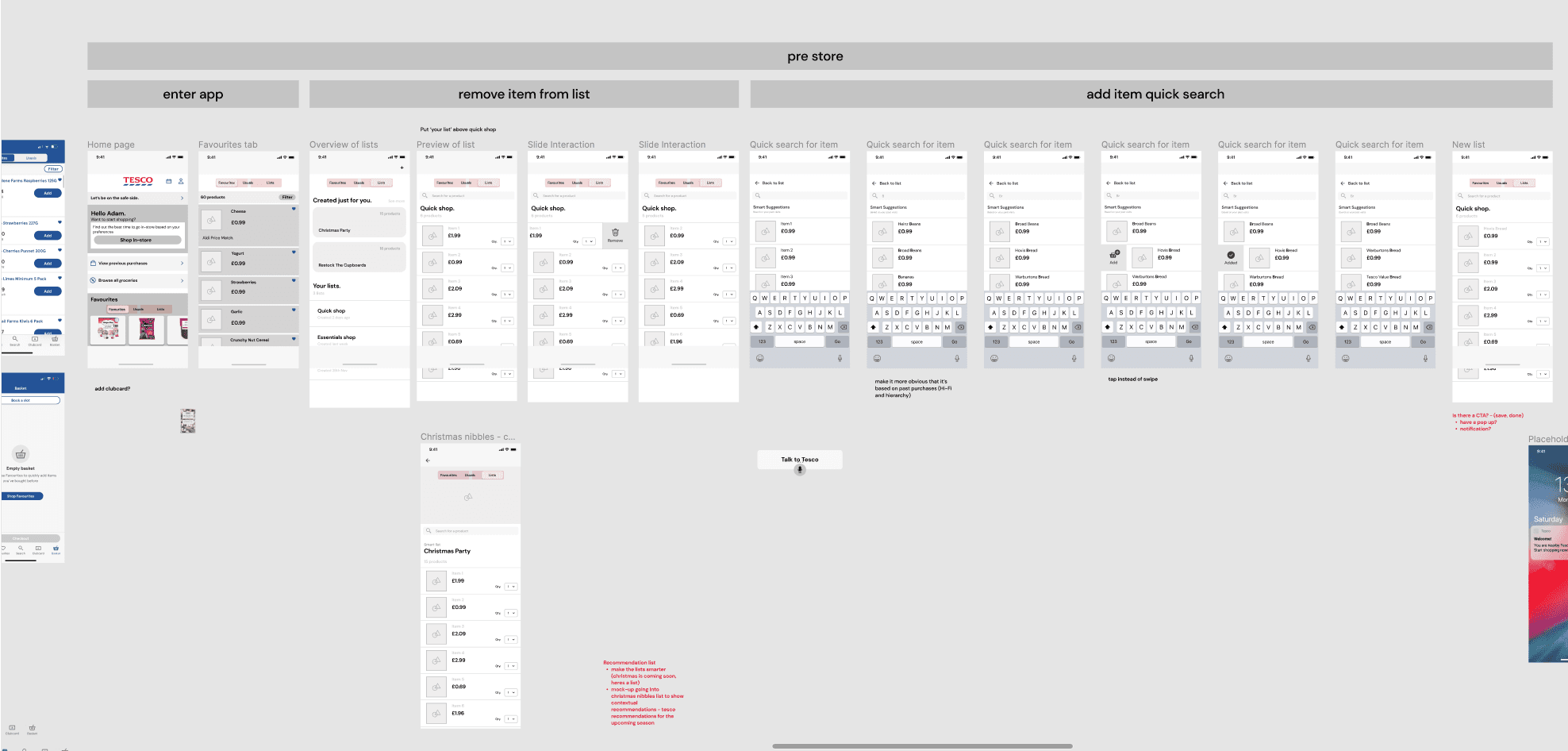
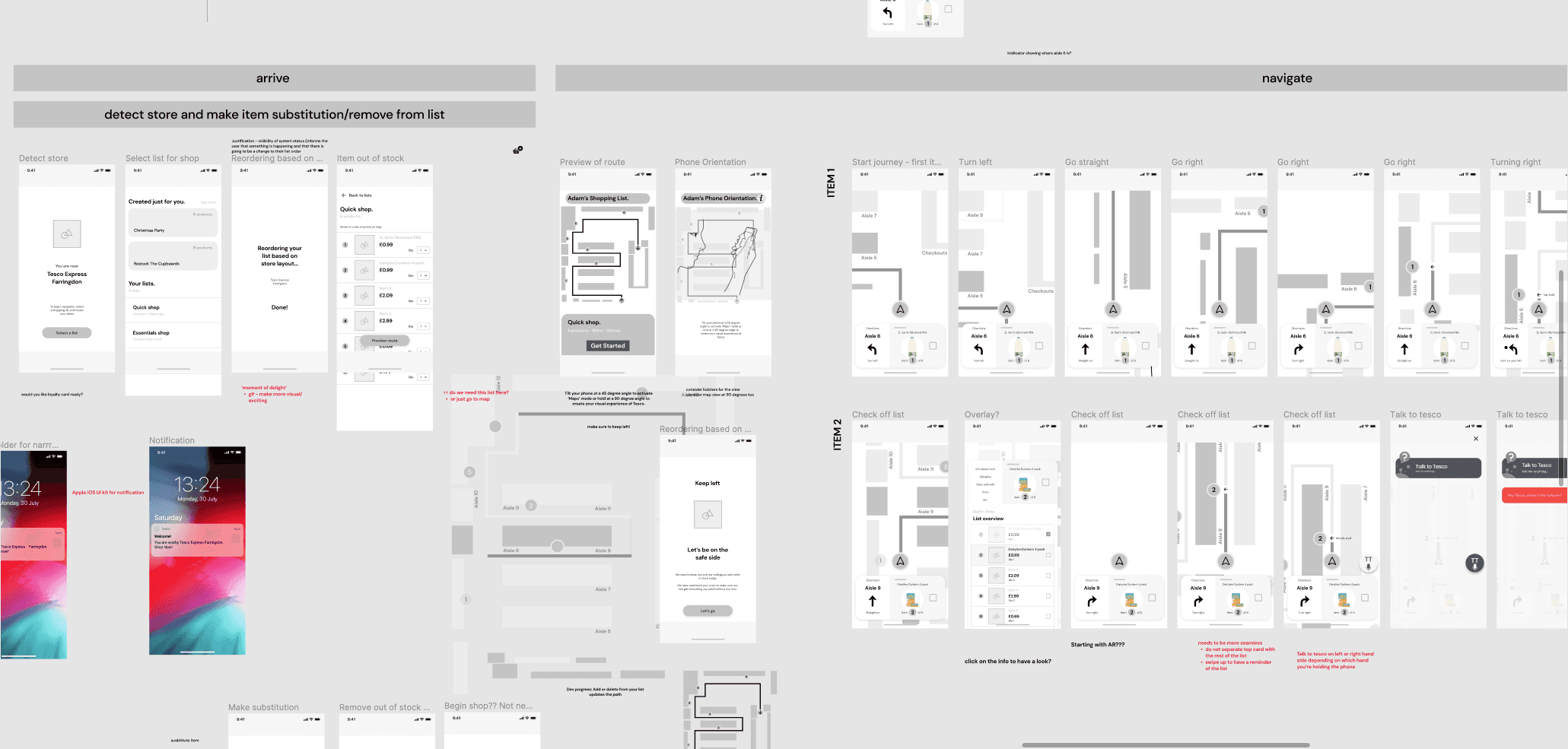
User Journeys
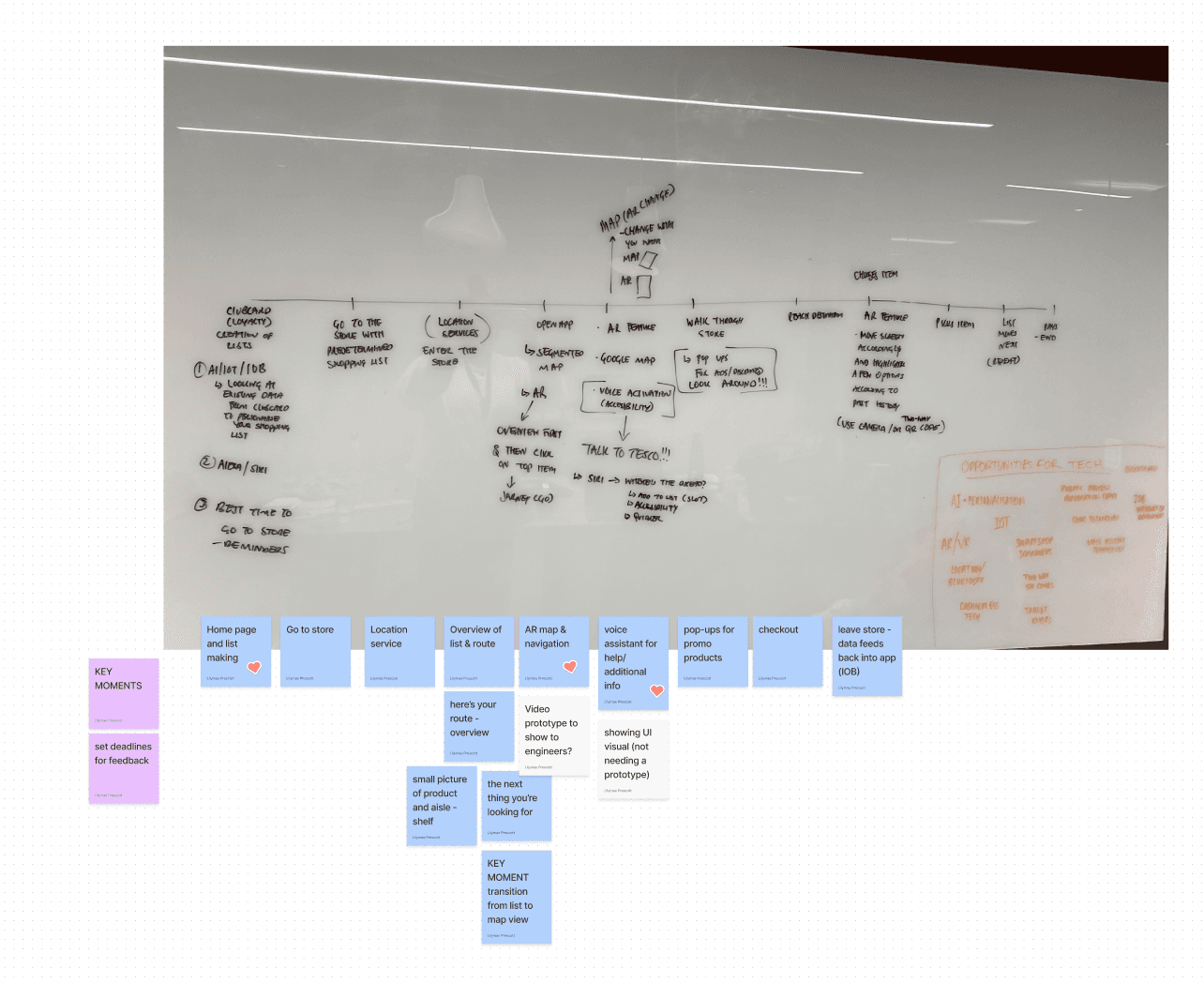
It was important to understand how the four key journeys were going to intertwine with each other. Iterating on this helped to bring clarity in the core functionality of each screen when designing the experience of the interfaces themselves.

Outcome
A conversational companion without cutting corners
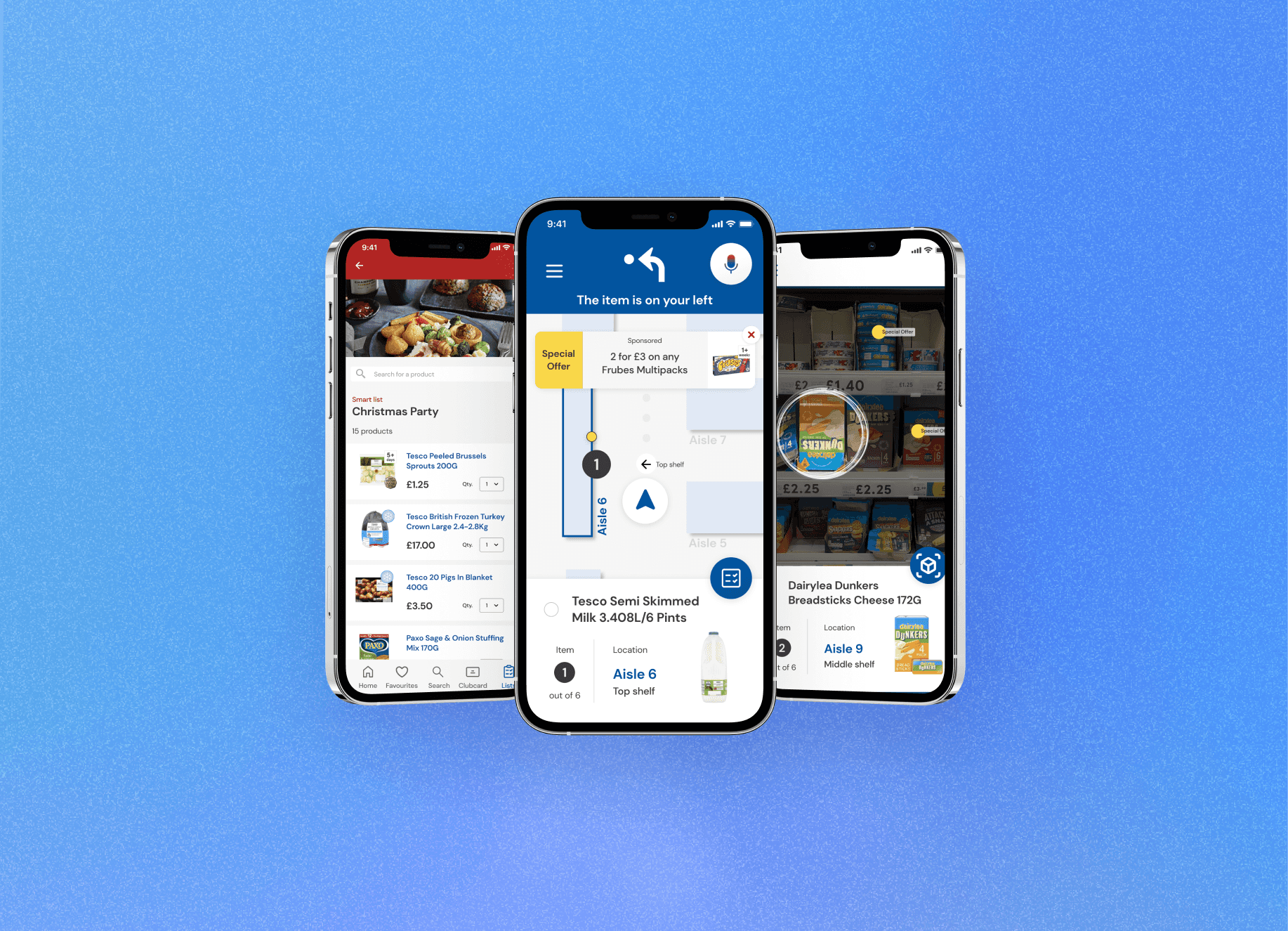
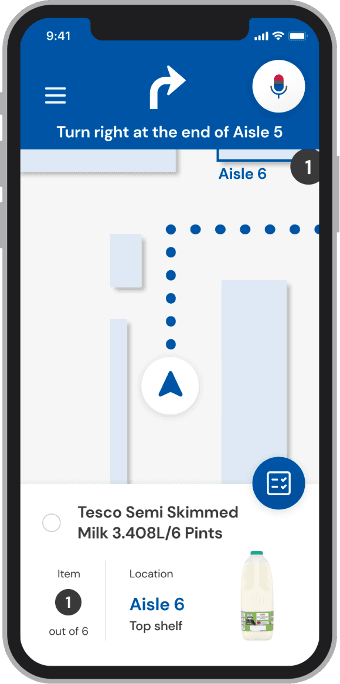
Talk to Tesco fuses automation, personalisation and navigation to bring an all-in-one personal assistant right into the Tesco app.
It optimises the in-store experience by calculating the quickest path using shopping list data, sign-posting to personalised deals and providing meaningful support right from the customer’s pocket.
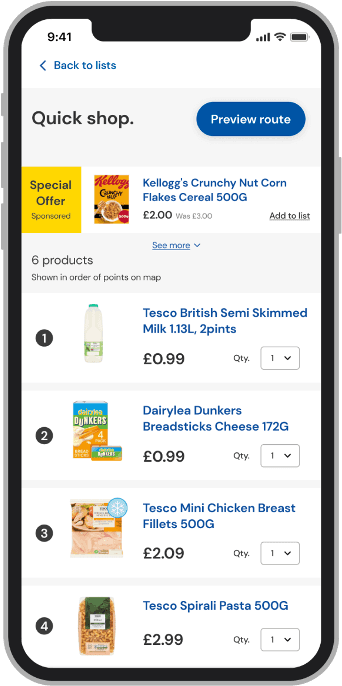
Smart Lists
Automates the list creation process by using purchase history and identifying shopping patterns to generate editable lists. Factors include frequency of purchase, seasonal factors and the interests of similar shoppers.
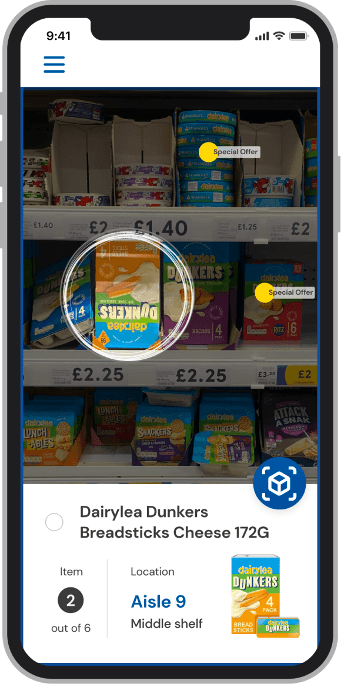
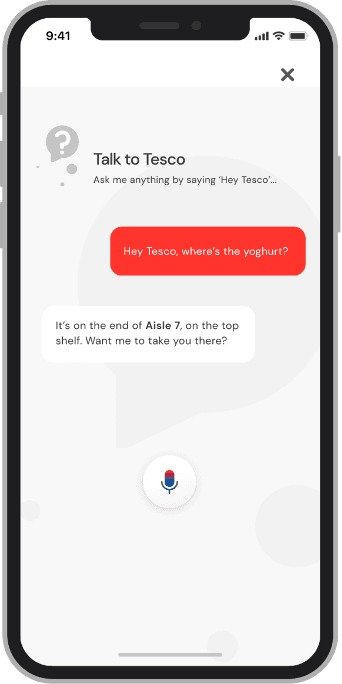
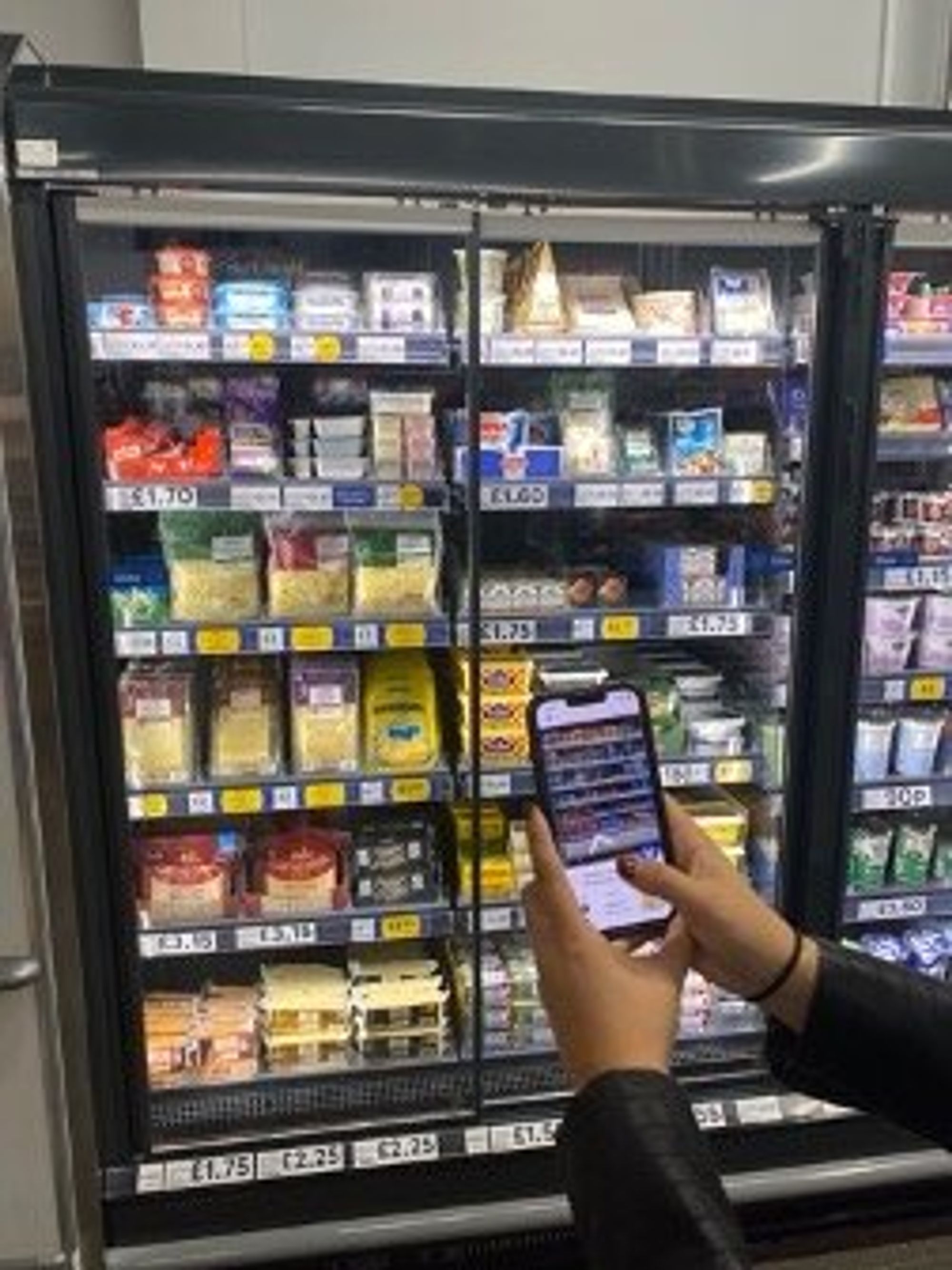
We visited the Tesco GetGo store in Holborn to prototype our idea with real users and get feedback on the concept.
“This would definitely cut my shopping time down, especially in bigger stores”
“It’s quite easy to understand , I’d use it if it was a real app”
“…I guess my main concern is if everyone is stuck to their phones when you’re trying to walk around”