Sky Sports: Call the Shot
Role
Senior UX Designer
Team
Lead product designer
UI Designer
Product manager
Timeline
3 weeks
Skills
Gamification
UX Design
Cross-platform experiences
Brief
Turning passive viewing into active play, without pulling fans away from the screen
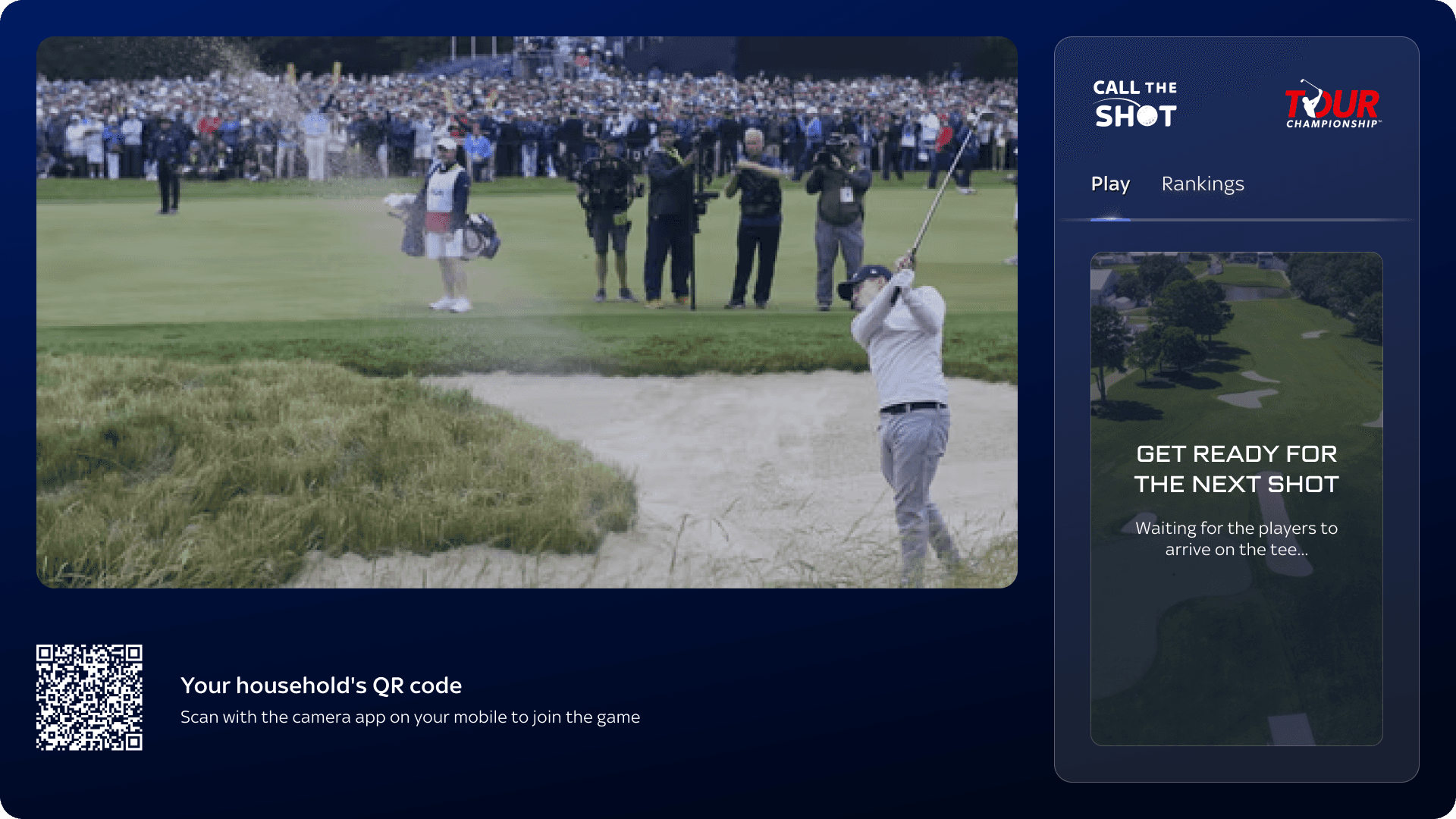
Sky Sports wanted to explore how fans could actively participate in a live golf broadcast without a betting licence. The concept: viewers scan a QR code on their TV, open a web app on their phone, and predict where the next shot will land by dropping a pin on a map, a lightweight "soft betting" mechanic designed to test engagement in a legally safe way.
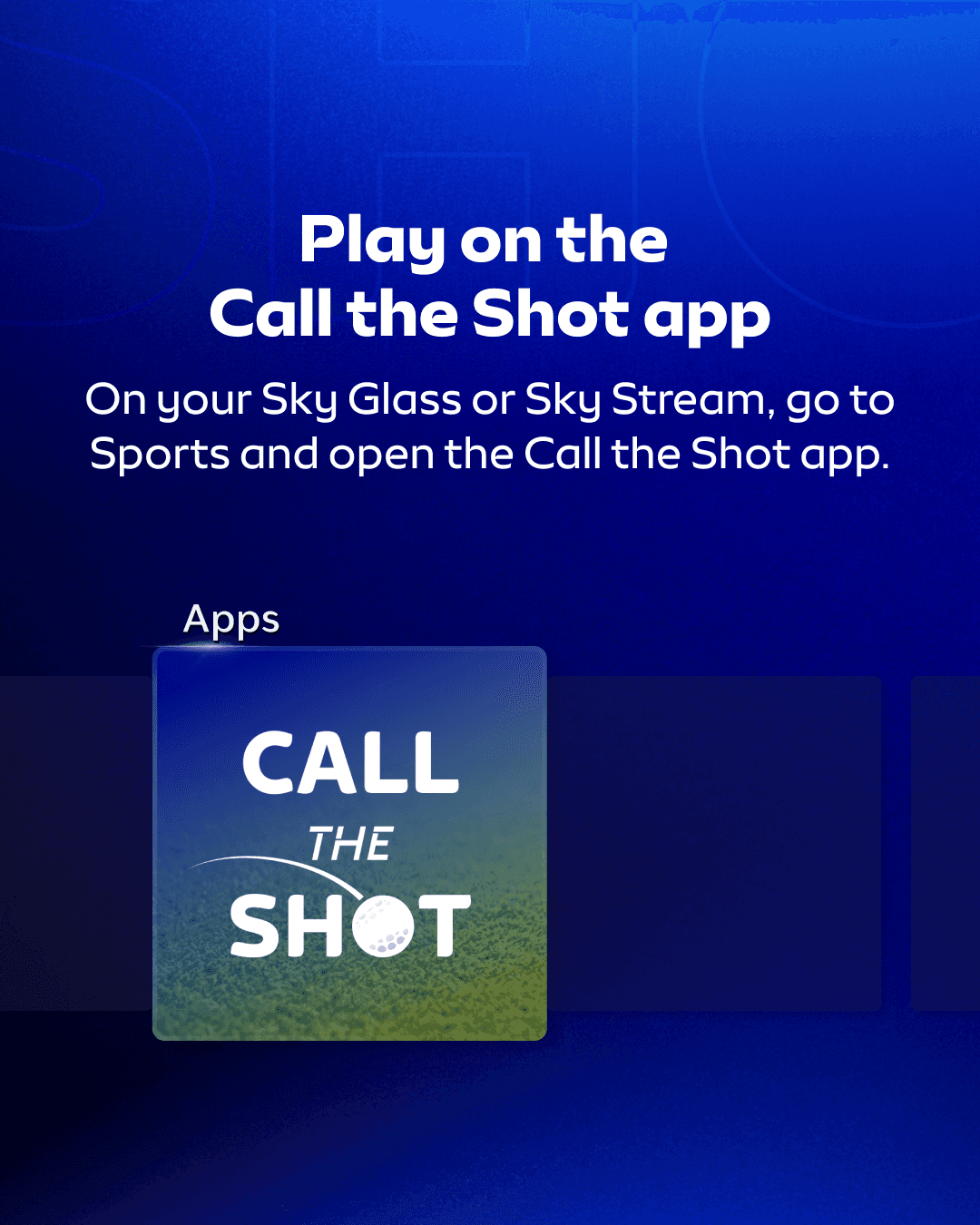
The technology direction was already set when I joined. My focus was on the player experience: defining the game mechanics, key user journeys, and the cross-platform flow from TV to mobile.

Design process
Working within a moving build
Joining mid-project meant the tech stack and timeline were fixed. Rather than starting from a brief, I had to quickly identify the UX gaps that still needed solving:
How the household leaderboard would work
How to transition smoothly between tee-offs
How game mechanics would feel to someone unfamiliar with golf
I worked through each of these in parallel with the engineering team, mapping the unknowns and prioritising what would have the most impact on the core experience.

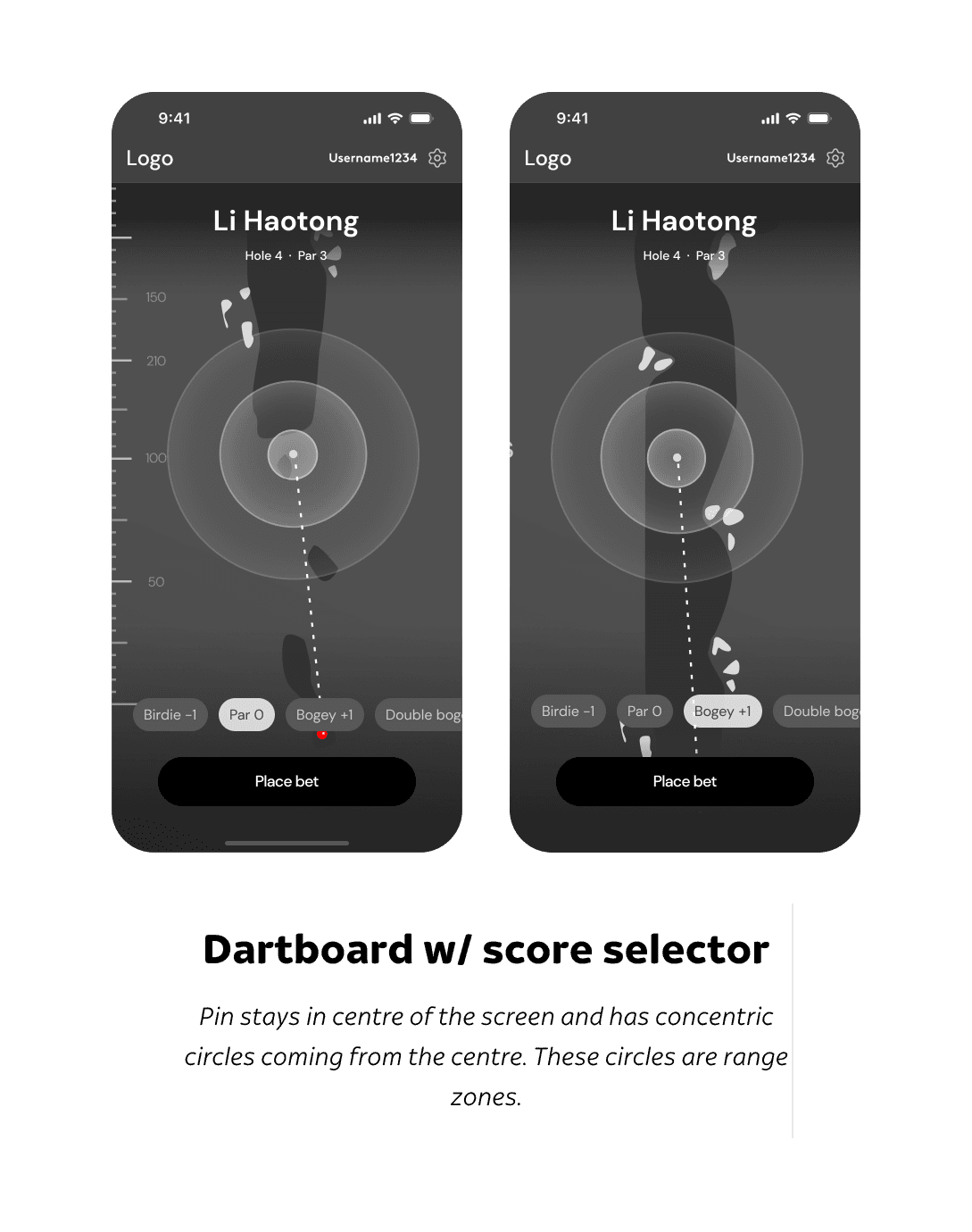
Designing for a 10-second window
The central UX challenge was time. Users had roughly 10 seconds during a broadcast to make their prediction, long enough to engage, not long enough for any friction. I explored different input models (free-form vs constrained), tested how to surface scoring in a way that felt fair, and worked to ensure the experience felt rewarding regardless of golf knowledge.
Scoring was designed to reward proximity and participation, so newer players still felt progress, while more engaged users had meaningful differentiation.


Testing in real broadcast conditions
We ran the prototype alongside a live golf game to see how it held up in practice. The critical issue that surfaced was synchronisation, without the game and broadcast aligned, the core mechanic doesn't work. This became the primary focus for the tech team's next iteration. Finding it in testing, rather than post-launch, gave the team time to address it properly.
Outcome
A robust proof-of-concept and a foundation for rightsholder conversations
The product moved into internal staff trials, where it's being tested against real broadcasts. Feedback from this phase is informing scoring adjustments, interaction refinements, and decisions around wider rollout.
The work has also given Sky Sports a concrete proof of concept to support conversations with golf leagues and organisations about digital partnership and broadcast innovation.




Key decisions
Simple explainers to get users onboarded quickly
Getting users into the game quickly was essential, especially mid-broadcast. A short FTUE flow introduces the core mechanic without slowing people down or pulling focus from the TV.

Timeout doesn't mean zero points
With only ~10 seconds per prediction, some users will always miss the window. Designing a fallback where timed-out users still receive partial credit keeps people engaged across the full broadcast rather than dropping off after one missed shot.

Keeping the TV the main event
The biggest risk with a second-screen experience is pulling attention away from the broadcast. Interactions on mobile were designed to be brief and purposeful. Audible cues were introduced so users could stay focused on the TV and still know when the next prediction window had opened.
Entitlement and household access without a login
Rather than requiring each user to create an account, entitlement is established via the existing TV sign-in. Household members just scan the QR code — access is already confirmed. Usernames are tied to device IP, so users can return and continue without needing an email or password. This also removes the barrier for younger family members who want to join in.

Reflection
Designing an experience with technical implementation already pre-defined
This project was a good test of working effectively when you don't have full ownership. The tech was set, the timeline was short, and the design needed to move quickly. The focus was on identifying the highest-value problems and solving them clearly, without the luxury of a blank canvas.
The work played a meaningful role in translating a complex technical concept into something usable and testable, and in surfacing the issues that mattered most before they became launch problems.
Testimonial
"She quickly and seamlessly joined a challenging project, immediately delivering value and important perspective. She brought not only her domain knowledge to the team, but also her UX skills. She's great at popping her head up above a project and looking at things that have been overlooked, be it an edge case that was missed or a feature that needed to be more thought through."
- Lead Product Designer
